Address
304 North Cardinal
St. Dorchester Center, MA 02124
Work Hours
Monday to Friday: 7AM - 7PM
Weekend: 10AM - 5PM
Address
304 North Cardinal
St. Dorchester Center, MA 02124
Work Hours
Monday to Friday: 7AM - 7PM
Weekend: 10AM - 5PM
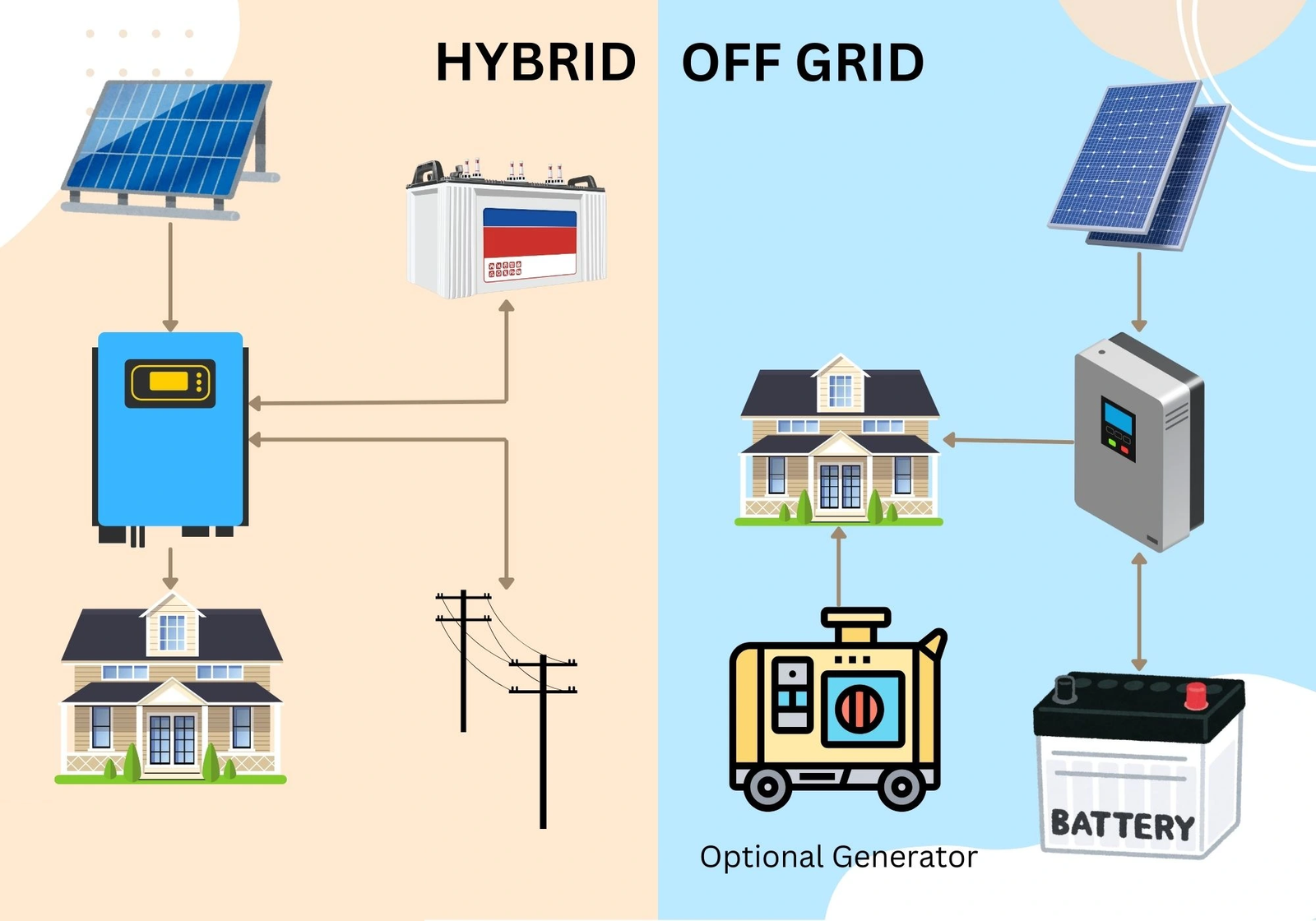
As renewable energy systems in Australia become more complex, one component is increasingly taking center stage: the hybrid inverter.
Unlike traditional solar inverters, hybrid inverters are designed to manage solar panels, battery storage, the grid, and EV chargers within a single intelligent system. For both homeowners and businesses, they are becoming the backbone of modern energy solutions.
This article explains what hybrid inverters are, how they work, and why they are essential for Australia’s renewable energy future.
A hybrid inverter is an advanced energy management device that combines the functions of:
Instead of treating solar, batteries, and loads as separate systems, a hybrid inverter coordinates energy flows in real time, ensuring electricity is used in the most efficient and cost-effective way.
In a typical Australian renewable energy setup, a hybrid inverter can:
This centralized control makes hybrid inverters ideal for integrated solar + storage + EV charging systems.
Australia’s energy environment makes hybrid inverters especially valuable.
Key local factors include:
Hybrid inverters allow users to consume more of their own solar energy, reducing reliance on the grid and improving return on investment.
For Australian households, hybrid inverters offer:
Even homes without batteries today can benefit from installing a hybrid inverter that allows easy upgrades in the future.
In commercial settings, hybrid inverters support:
For businesses planning long-term electrification, hybrid inverters simplify system architecture and reduce overall complexity.
| Feature | Traditional Inverter | Hybrid Inverter |
|---|---|---|
| Solar only | ✅ | ✅ |
| Battery integration | ❌ / Limited | ✅ |
| EV charging support | ❌ | ✅ |
| Backup power | Limited | Strong |
| Future scalability | Low | High |
As energy systems evolve, traditional inverters are increasingly being replaced by hybrid solutions.
Before selecting a hybrid inverter in Australia, consider:
Choosing the right inverter is critical—it determines how efficiently your entire energy system performs.
Hybrid inverters are not just household devices; they are foundational to:
As Australia moves toward a decentralized energy model, hybrid inverters will play a central role in grid stability and energy optimization.
Hybrid inverters are the intelligent core of modern renewable energy systems. By connecting solar panels, batteries, EV chargers, and the grid into a single coordinated platform, they enable smarter, more resilient, and more cost-effective energy use.
For Australian homes and businesses planning for 2026 and beyond, hybrid inverters are no longer optional—they are essential.